NestyFinds

Blueair Blue Pure 511

By the NestyFinds editorial team · Researched from manufacturer documentation, manuals and the AHAM Verifide directory · not bench-tested · Reviewed:

Blueair Blue Pure 511
189 ft² CADR 122 cfm AHAM Verifide CARB certified Filter ~6 mo 24–49 dB

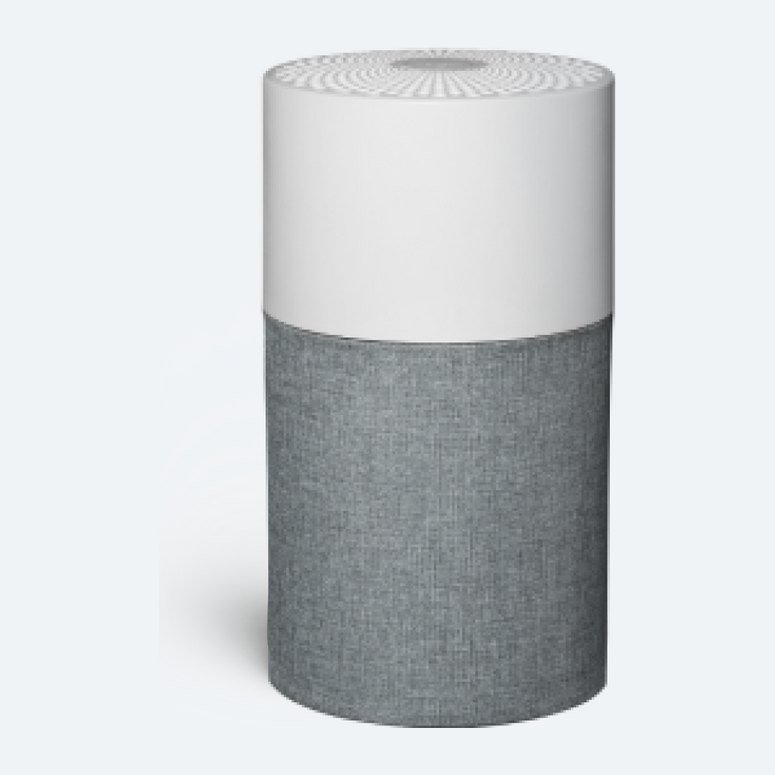
A 4.2 lb, three-speed, single-button room air purifier using one combined particle-and-carbon filter behind a washable fabric pre-filter, AHAM Verifide at 122 cfm smoke CADR and measured by AHAM at 14.2 W at that rated output (Blueair rates energy consumption at 16 W).

Pros

  • AHAM Verifide, so the performance numbers are third-party tested rather than self-declared: 122 cfm smoke, 123 dust, 123 pollen, plus a 124 PM2.5 CADR, listed under Blueair model 3131000000 in AHAM's directory. ENERGY STAR's independent record for the same model lists the identical four figures.
  • That output is measured at 14.2 W — the power AHAM records at the rated smoke CADR; Blueair's own rated energy-consumption figure is 16 W. AHAM records an Integrated Energy Factor of 7.00 and 99 kWh estimated annual consumption (ENERGY STAR lists 89 kWh/yr for the same model), and the model carries Energy Star certification.
  • Blueair publishes the air-change basis openly: 189 sq ft at 4.8 ACH in its own Technical Specifications table, which is one air change every 12.5 minutes. That figure matches AHAM's listed room size exactly, so you can compare it against other units without decoding a marketing number.

Cons

  • No air-quality sensor, no auto mode, no timer, no app and no documented child lock. Blueair's own spec sheet lists "Integrated air sensors: No" and "On/off timer: FALSE" — you set one of three fan speeds by hand and it stays there.
  • CARB lists it as an "Electronic" air cleaning device (EO G-23-092), because HEPASilent electrostatically charges particles before the filter, and Blueair documents no user control to switch that stage off. Its certified ozone emission is low — ENERGY STAR lists 1 ppb for model 3131000000 — but the 511 does not carry the Intertek "5 ppb or less" Zero Ozone Verification that Blueair attributes to its Blue Pure Auto, DustMagnet, HealthProtect and Pure Fan Auto lines.
  • The carbon is a thin layer inside the single combined filter, which Blueair rates only for "light household odors from smoke, cooking odors and more" — it is not the deep carbon bed you would want for persistent VOC or smoke-odour work.

Our editorial rating, not a lab measurement. Weighed third-party-verified filtration output against running cost, coverage honesty and feature set. In favour: strong AHAM-verified CADR per watt (122 cfm smoke measured at 14.2 W), an air-change basis the brand states openly on its own site (189 sq ft at 4.8 ACH), and a certified model-specific ozone emission of 1 ppb, 50 times below the CARB limit. Against: a complete absence of sensing, automation and timers; a thin carbon layer inside a single combined filter, rated by Blueair only for light household odours; an electrostatic stage with no documented off switch; and a retail coverage headline far above anything the manufacturer documents.

Verdict

The Blue Pure 511 is an AHAM Verifide unit rated at 122 cfm smoke, 123 dust and 123 pollen CADR, which Blueair documents as 189 sq ft at 4.8 air changes per hour — one air change every 12.5 minutes. AHAM measured 14.2 W at that rated output; Blueair rates energy consumption at 16 W. It has no air-quality sensor, auto mode, timer or app. CARB lists it as an "Electronic" air cleaning device under EO G-23-092 because HEPASilent electrostatically charges particles before the filter; every portable air cleaner sold into California must be certified against the 50 ppb ozone limit regardless of type, and ENERGY STAR publishes a certified 1 ppb emission figure for this model.

Check current price for the Blueair Blue Pure 511 on Amazon (opens in a new tab)

Price, seller and package contents change. Check the variant on Amazon before you buy.

Is it the right one for you?

Who it's for

  • You want a purifier for a bedroom, dorm room or home office of roughly 180-190 sq ft and want the unit genuinely turning the air over 4.8 times an hour there, rather than a headline number measured at one air change.
  • You plan to run it continuously and care about the electricity draw: 14.2 W at the AHAM-rated output (16 W Blueair rated consumption), 99 kWh per year per AHAM — ENERGY STAR lists 89 — Energy Star certified, with an AHAM Integrated Energy Factor of 7.00.
  • You want something small and manual on a nightstand or shelf — 13.4 inches tall, 4.2 lb, one button, three speeds, top air outlet and 360-degree intake so it can sit close to a wall.

Who should skip it

  • Your room is meaningfully larger than 189 sq ft. At the 4.8 ACH basis this unit covers 189 sq ft, so an open-plan living room or a large primary bedroom needs a higher-CADR model — within the same brand that is the Blue Pure 211i Max rather than stretching this one to its 30-minute 413 sq ft figure.
  • You want the purifier to react on its own. There is no particulate sensor, no auto mode and no app, so it will not ramp up when you start cooking or when outdoor smoke rises — if that matters, buy a sensing model such as the Blue Pure 511i Max, which adds the sensor and app control this one lacks.
  • You specifically want a purely mechanical purifier with no electrical charging stage. CARB classifies this model as an Electronic air cleaning device and Blueair documents no switch to disable the electrostatic stage, so a purely mechanical filter unit is the better match.

Specifications

How this coverage figure is stated

4.8 air changes per hour. Blueair publishes "Air changes per hour (ACH): 4.8" in its own Technical Specifications table alongside the 189 sq ft figure — one air change every 12.5 minutes, which matches Blueair's "Quickly cleans 189 ft² in 12.5 minutes" headline and reconciles with AHAM's 189 sq ft listed room size at 122 cfm smoke CADR. The same page separately claims "up to 413 ft² in 30 minutes", which works out to roughly 2 ACH and is a different, weaker basis.

Always compare two purifiers at the same air-change rate; manufacturers pick different ones and the headline square footage is not otherwise comparable.

Blueair Blue Pure 511 — documented specifications
CADR — Smoke 122 cfm
Recommended room size 189 sq. ft. (AHAM listed room size: 189 sq ft / 18 m²)
Carbon layer scope "Traps light household odors from smoke, cooking odors and more"
Filter life About 6 months a red filter-replacement LED on the interface indicates when to change it
Replacement filter Blue Pure 511 Particle + Carbon Filter, SKU 110009, UPC 689122023199
Model number 3131000000
The full record: 30 more documented specifications — nothing is removed, it is just not what decides
Blueair store SKU / UPC SKU 109994, UPC 689122023182
CADR — Dust 123 cfm
CADR — Pollen 123 cfm
CADR — PM2.5 (optional AHAM metric) 124 cfm
AHAM Verifide Yes listed as Blueair "Blue Pure 511 (3131000000)", US market, with certified replacement filters
Air changes per hour (ACH) 4.8 (Blueair Technical Specifications table) one air change every 12.5 minutes in 189 sq ft, which is also what AHAM's 189 sq ft room size implies at 122 cfm. Blueair's FAQ words the same basis in a way that computes to 19.2 ACH; see notes.
Secondary coverage claim 413 ft² in 30 minutes Blueair's own wording, and a 30-minute basis rather than the 4.8 ACH one. Not comparable with the 189 ft² above.
Filtration technology HEPASilent "combines electrostatic and mechanical filtration"; Blueair markets "4 layers of filtration"
Particle rating "removes 99.97% of airborne particles down to 0.1 microns" Blueair's own claim, footnoted on its product page
Number of filters 1 (combined Particle + Carbon), plus a washable fabric pre-filter
Sound level 24–49 dB (Blueair Technical Specifications table; the FAQ on the same page says 22 dB low / 44 dB high see notes)
Energy consumption (Blueair rated) 16 W
Operating watts at smoke CADR (AHAM) 14.2 W
Estimated annual energy consumption (AHAM) 99 kWh
Estimated annual energy consumption (ENERGY STAR) 89 kWh/yr conflicts with AHAM's 99 kWh for the same model; both are recorded, neither is reconciled by its publisher
Integrated Energy Factor (AHAM) 7.00
Energy Star Yes AHAM Verifide directory entry, and ENERGY STAR certification dated 2023-04-13 under partner Blueair Inc.
Ozone emissions (certified, model-specific) 1 ppb (0.001 ppm) ENERGY STAR Certified Room Air Cleaners V3.0 record for model 3131000000, UPC 689122023182, partner Blueair Inc., certified 2023-04-13
Voltage / frequency (AHAM) 100–240 V, 50/60 Hz
Dimensions (H x W x D) 13.4" x 7.9" x 7.9"
Weight 4.2 lb
Air outlet Top (360° intake design)
Speed control options 1 2 – 3 (three fan speeds, single-button control)
Integrated air sensors No
On/off timer No (Blueair feature list: "On/ off timer: FALSE")
CARB certification Certified Blueair AB, Blue Pure 511, model 3131000000, type "Electronic", notified 2023-04-19, Executive Order G-23-092
CARB ozone limit 0.050 ppm (50 ppb) ozone emission concentration limit under AB 2276 applied to all portable indoor air cleaners sold in or shipped to California regardless of mechanical or electronic type
Warranty 1 year, extended to 2 years with product registration
In the box 1 air purifier, 1 Particle & Carbon filter, 1 pre-filter (Arctic Trail)
Regulatory compliance marks (manual) FCC Part 15; "This Class B digital apparatus complies with Canadian ICES-003"
13 things we could not verify — we leave these blank rather than estimate them
  • Blueair publishes two different sound levels for this unit and reconciles neither: the Technical Specifications table says 24–49 dB, while the FAQ on the same page says the unit runs at 22 dB on low and no louder than 44 dB on high. No dB-per-fan-speed breakdown exists in any Blueair document, so the top-speed noise a buyer should plan for is uncertain within a 5 dB band. The spec-table pair (24 and 49 dB) is what this page records.
  • Blueair publishes no model-specific ozone figure of its own for the 511. Its ozone article states only that its purifiers test "far below" the 50 ppb CARB limit under UL Standard 867 at Intertek, and the "5 parts per billion (ppb) or less" Zero Ozone Verification it advertises covers the Blue Pure Auto, DustMagnet, HealthProtect and Pure Fan Auto lines, not this one. The only model-specific measured value available comes from ENERGY STAR (1 ppb), not from the manufacturer. Third-party review sites assert a UL 2998 zero-ozone listing for the 511; no manufacturer or certifier source supports that, so it is not recorded. The CARB listing confirms certification but publishes no measured value.
  • AHAM and ENERGY STAR disagree on annual energy consumption for model 3131000000: 99 kWh/yr versus 89 kWh/yr, an 11% gap that neither publisher reconciles. Both figures are recorded and labelled by source, so anyone budgeting a yearly running figure should treat 99 kWh as the ceiling. The Integrated Energy Factor (7.00) and all four CADR figures agree exactly across the two sources.
  • Blueair's FAQ describes the 189 sq ft coverage as "the AHAM recommendation of 4 times every 12.5 minutes", which computes literally to 19.2 ACH — four times the 4.8 ACH its own Technical Specifications row gives for the same coverage. The 4.8 figure is the one used here, because it is what Blueair's "cleans 189 ft² in 12.5 minutes" headline and AHAM's 189 sq ft room size at 122 cfm both produce. Anyone taking the FAQ phrasing at face value would overstate this unit's air turnover by a factor of four.
  • No Blueair document for this model says whether the HEPASilent electrostatic charging stage can be switched off. The unit has one button, three fan speeds and no ionizer control, which strongly implies it cannot, but no manufacturer statement confirms it — so a buyer who wants a purely mechanical unit cannot settle the question from Blueair's own material. A "cannot be turned off" claim exists in a Blueair Support reply on a retailer Q&A page for a different model; that is not documentation for the 511 and is not recorded as a spec.
  • Blueair markets "4 layers of filtration" but never itemises the four layers on the product page, in the FAQ or in the user manual. The stages listed here are the components Blueair names individually (washable fabric pre-filter, electrostatic charging, particle layer, activated carbon layer); they are not Blueair's own enumeration and may not correspond one-to-one to its count.
  • A child lock is not mentioned in Blueair's spec table, product FAQ or user manual. It is recorded as not verified rather than absent — absence of mention is not documented absence — so a household that needs one cannot confirm it either way before buying.
  • AHAM's printed 2023 Directory (Edition 4, October 2023) lists model 3131000000 at 112 dust / 112 smoke / 112 pollen CADR with a 201 sq ft room size, while the current online AHAM Verifide directory lists 123 dust / 122 smoke / 123 pollen with 189 sq ft. The online figures are used here because they match Blueair's published figures and ENERGY STAR's independent record for the same model. AHAM publishes no rerate note, so why the printed edition differs is unexplained, and older reviews citing 201 sq ft are citing the superseded row.
  • The Amazon listing's coverage claims match no manufacturer source. ASIN B08KPJCDN6 currently headlines "up to 907 Ft²" with no stated air-change basis, and an earlier version of the same listing said "432 sq ft coverage". Blueair's own documented figures are 189 sq ft at 4.8 ACH and "up to 413 ft² in 30 minutes". Neither 907 nor 432 sq ft appears in any Blueair or AHAM source, so neither is recorded — a buyer sizing a room from the retail listing is sizing from a number with no published basis.
  • Blueair prints no filter part number in the retail product description or in the user manual, and the AHAM directory entry carries no filter part number field for this model. SKU 110009 is taken from Blueair's own store product data for the Blue Pure 511 Particle + Carbon Filter. Retailer listings use an unofficial "511FILTER" designation that Blueair does not use, so that string cannot be used to confirm a genuine part.
  • The Blueair product page at blueair.com/products/blue-pure-511 never states the model number 3131000000 — it carries only store SKU 109994 and UPC 689122023182. The model number is cited here to CARB's certified-device list and is independently confirmed by the AHAM directory record, the ENERGY STAR database and the user manual, but a buyer cross-checking certifications cannot make the link from the Blueair page alone.
  • No m³/h CADR equivalent is published in US-market documentation by either AHAM or Blueair, so none is recorded; comparing this unit against an EU-market datasheet requires converting the cfm figures by hand.
  • The user manual available is a third-party mirror (manuals.plus). It confirms the model number and the FCC/ICES compliance text, but it carries no CADR, wattage, dimension, ozone or certification specifications, and Blueair's own QR-code "extended manual" was not reachable — so the manual cannot corroborate any performance figure on this page.

Our calculation, not the manufacturer’s

What 122 cfm of smoke CADR actually covers

Air changesWhen you want this rateRoom it suits
4.8×/hourWildfire smoke, allergy season, a room you are sensitive in191 ft²
4×/hourThe rate most allergy guidance assumes229 ft²
2×/hourGeneral freshening in a room without a specific problem458 ft²

Worked from the CDC/NIOSH relation air changes = (CADR × 60) ÷ (area × ceiling height), assuming an 8 ft ceiling. Change the ceiling height and these numbers change. AHAM’s own consumer rule — a smoke CADR of at least two-thirds of the room’s area — puts the ceiling for this unit at about 183 ft², which is the same arithmetic at roughly five air changes an hour.

You can check this at home. In a closed room of the size in the first row, PM2.5 should halve about every nine minutes at top speed once its source stops. A monitor shows whether this unit manages that in your home. How to run the test

Ionizer and ozone

This unit has an electrostatic charging stage, not an optional ionizer mode. Blueair describes HEPASilent as technology that "combines electrostatic and mechanical filtration", meaning particles are given an electric charge before they reach the filter media so they cling to it more readily. Every portable indoor air cleaner sold in, or shipped to, California must be CARB-certified against the 0.050 ppm (50 ppb) ozone emission limit regardless of how it filters — CARB's list carries thousands of "Mechanical" devices alongside thousands of "Electronic" ones, so the classification is not what triggers the testing. CARB's certified-device list records the Blue Pure 511 (model 3131000000) as "Electronic" rather than "Mechanical", Executive Order G-23-092, dated 2023-04-19; that label records only that the unit uses an electrical charging stage rather than being purely mechanical. A model-specific measured ozone figure is published: the ENERGY STAR Certified Room Air Cleaners V3.0 database lists ozone emissions of 1 ppb for model 3131000000 (UPC 689122023182), reported by ENERGY STAR partner Blueair Inc. and certified 2023-04-13 — 50 times below the CARB limit. Blueair itself publishes no model-specific figure on its own pages; its general ozone article states that its purifiers are "tested in accordance with UL Standard 867" at Intertek, "a CARB-accredited test lab", with emissions "far below" the 50 ppb limit, and it attributes a separate "5 parts per billion (ppb) or less" Zero Ozone Verification to the Blue Pure Auto, DustMagnet, HealthProtect and Pure Fan Auto lines — the Blue Pure 511 is not named in that verification. Blueair documents no user control for the electrostatic stage: the 511 has a single button, three fan speeds, no ionizer switch and, per Blueair's own spec sheet, no integrated air sensors or timer. No UV-C lamp and no PlasmaWave-type reactive mode is present or claimed on this model.

What you actually get

What the linked package includes
Capability What it needs Status
Particle filtration (Blueair calls the technology HEPASilent and claims 99.97% of airborne particles down to 0.1 micron) Blue Pure 511 Particle + Carbon filter, SKU 110009 — one ships installed in the box Included
Carbon / odour control Activated carbon layer inside the same SKU 110009 filter; no separate carbon cartridge exists for this model Included
Washable pre-filter Fabric outer pre-filter — Blueair's box contents list "1 Pre-Filter in Arctic Trail"; alternative colours are a separate purchase Included
Air-quality sensor An integrated particulate sensor. Blueair's spec sheet states "Integrated air sensors: No", and Blueair offers no add-on sensor for this model. The sensing model in this line is the Blue Pure 511i Max. Not verified
Auto mode An air-quality sensor to drive it, which this model does not have. Fan speed is set by hand from three positions. Not verified
App / smart control Wi-Fi and the Blueair app. Not offered on this model — Blueair's "i" suffix marks its connected units, and the 511 has none. The connected equivalent is the Blue Pure 511i Max. Not verified
Timer Blueair's feature list states "On/ off timer: FALSE" for this model. Not verified
Child lock Not mentioned in Blueair's spec table, product FAQ or the user manual, so it cannot be confirmed either way from manufacturer material. Not verified
Replacement filter (ongoing, about every 6 months) Blue Pure 511 Particle + Carbon Filter, SKU 110009 — bought separately after the in-box filter is spent; Blueair also sells a filter subscription Sold separately

Package contents vary by variant and seller. Check what is in the box on the Amazon listing before you buy. “Not verified” means the manufacturer does not document it either way — not that it is missing. “Not offered” is the other thing: the manufacturer does document it, and the answer is that this model does not have it.

Replacement filter

Full filter guide

Blueair Blue Pure 511 replacement filter

Part 110009 · Approximately 6 months of operation — but Blueair is unusually specific about why that is an approximation, and it is worth reading. Its filter page states that "Blueair's proprietary RealTrack algorithm accurately calculates the remaining filter lifetime based on fan speed, usage time and pollution levels". In other words the manufacturer is saying outright that the interval depends on how hard the unit has worked and in what air, and that the machine, not the calendar, is tracking it. That is the usage assumption most listings hide; here it is the stated mechanism. What Blueair does NOT state on the filter page is an hours-per-day figure behind the 6 months, so the number cannot be scaled by hand. Treat the indicator as the authority on this unit and the 6 months as a planning figure.

Which filter fits

Compared head to head

How we researched this

Checked against the AHAM Verifide directory, CARB's certified air-cleaner list, the ENERGY STAR certified-products list and the manufacturer's own pages. We did not test this unit. Nothing here is a measurement of ours: every figure is either documented by the manufacturer or published by an independent standards or testing body, and where the two disagree this page says so.

Not verified for this model — 13 notes
  • Blueair publishes two different sound levels for this unit and reconciles neither: the Technical Specifications table says 24–49 dB, while the FAQ on the same page says the unit runs at 22 dB on low and no louder than 44 dB on high. No dB-per-fan-speed breakdown exists in any Blueair document, so the top-speed noise a buyer should plan for is uncertain within a 5 dB band. The spec-table pair (24 and 49 dB) is what this page records.
  • Blueair publishes no model-specific ozone figure of its own for the 511. Its ozone article states only that its purifiers test "far below" the 50 ppb CARB limit under UL Standard 867 at Intertek, and the "5 parts per billion (ppb) or less" Zero Ozone Verification it advertises covers the Blue Pure Auto, DustMagnet, HealthProtect and Pure Fan Auto lines, not this one. The only model-specific measured value available comes from ENERGY STAR (1 ppb), not from the manufacturer. Third-party review sites assert a UL 2998 zero-ozone listing for the 511; no manufacturer or certifier source supports that, so it is not recorded. The CARB listing confirms certification but publishes no measured value.
  • AHAM and ENERGY STAR disagree on annual energy consumption for model 3131000000: 99 kWh/yr versus 89 kWh/yr, an 11% gap that neither publisher reconciles. Both figures are recorded and labelled by source, so anyone budgeting a yearly running figure should treat 99 kWh as the ceiling. The Integrated Energy Factor (7.00) and all four CADR figures agree exactly across the two sources.
  • Blueair's FAQ describes the 189 sq ft coverage as "the AHAM recommendation of 4 times every 12.5 minutes", which computes literally to 19.2 ACH — four times the 4.8 ACH its own Technical Specifications row gives for the same coverage. The 4.8 figure is the one used here, because it is what Blueair's "cleans 189 ft² in 12.5 minutes" headline and AHAM's 189 sq ft room size at 122 cfm both produce. Anyone taking the FAQ phrasing at face value would overstate this unit's air turnover by a factor of four.
  • No Blueair document for this model says whether the HEPASilent electrostatic charging stage can be switched off. The unit has one button, three fan speeds and no ionizer control, which strongly implies it cannot, but no manufacturer statement confirms it — so a buyer who wants a purely mechanical unit cannot settle the question from Blueair's own material. A "cannot be turned off" claim exists in a Blueair Support reply on a retailer Q&A page for a different model; that is not documentation for the 511 and is not recorded as a spec.
  • Blueair markets "4 layers of filtration" but never itemises the four layers on the product page, in the FAQ or in the user manual. The stages listed here are the components Blueair names individually (washable fabric pre-filter, electrostatic charging, particle layer, activated carbon layer); they are not Blueair's own enumeration and may not correspond one-to-one to its count.
  • A child lock is not mentioned in Blueair's spec table, product FAQ or user manual. It is recorded as not verified rather than absent — absence of mention is not documented absence — so a household that needs one cannot confirm it either way before buying.
  • AHAM's printed 2023 Directory (Edition 4, October 2023) lists model 3131000000 at 112 dust / 112 smoke / 112 pollen CADR with a 201 sq ft room size, while the current online AHAM Verifide directory lists 123 dust / 122 smoke / 123 pollen with 189 sq ft. The online figures are used here because they match Blueair's published figures and ENERGY STAR's independent record for the same model. AHAM publishes no rerate note, so why the printed edition differs is unexplained, and older reviews citing 201 sq ft are citing the superseded row.
  • The Amazon listing's coverage claims match no manufacturer source. ASIN B08KPJCDN6 currently headlines "up to 907 Ft²" with no stated air-change basis, and an earlier version of the same listing said "432 sq ft coverage". Blueair's own documented figures are 189 sq ft at 4.8 ACH and "up to 413 ft² in 30 minutes". Neither 907 nor 432 sq ft appears in any Blueair or AHAM source, so neither is recorded — a buyer sizing a room from the retail listing is sizing from a number with no published basis.
  • Blueair prints no filter part number in the retail product description or in the user manual, and the AHAM directory entry carries no filter part number field for this model. SKU 110009 is taken from Blueair's own store product data for the Blue Pure 511 Particle + Carbon Filter. Retailer listings use an unofficial "511FILTER" designation that Blueair does not use, so that string cannot be used to confirm a genuine part.
  • The Blueair product page at blueair.com/products/blue-pure-511 never states the model number 3131000000 — it carries only store SKU 109994 and UPC 689122023182. The model number is cited here to CARB's certified-device list and is independently confirmed by the AHAM directory record, the ENERGY STAR database and the user manual, but a buyer cross-checking certifications cannot make the link from the Blueair page alone.
  • No m³/h CADR equivalent is published in US-market documentation by either AHAM or Blueair, so none is recorded; comparing this unit against an EU-market datasheet requires converting the cfm figures by hand.
  • The user manual available is a third-party mirror (manuals.plus). It confirms the model number and the FCC/ICES compliance text, but it carries no CADR, wattage, dimension, ozone or certification specifications, and Blueair's own QR-code "extended manual" was not reachable — so the manual cannot corroborate any performance figure on this page.

Sources consulted

Other purifiers we have researched

All reviews